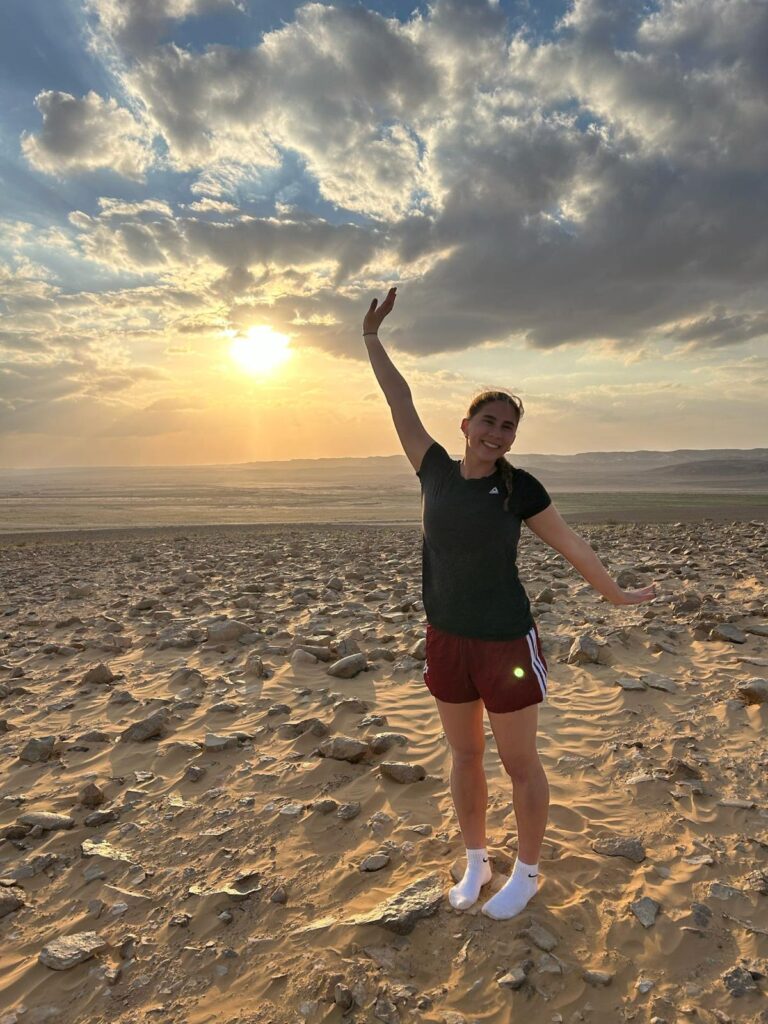
We weren’t supposed to be there for Purim. Our plan had been simple: leave the kibbutz Sunday afternoon, head back to Jerusalem, and celebrate the way we had imagined and planned – together on campus, structured, familiar. But plans don’t mean much during war. The sirens started Saturday morning. At first, they felt surreal – like something distant, something we were warned about but didn’t think would actually happen. But the sirens kept coming, randomly and unpredictable. Sometimes in the middle of prayer. The sound would cut through everything, and for a moment, nothing else existed but the question “Where do we go? How much time do we have?”
My name is Nava VanderWalde and I had an amazing opportunity to go on a High School in Israel Semester program called Tichon Ramah Yerushalayim. Part of this program is going on tiyulim (field trips) where we get to learn about the history of the land of Israel and its culture. One of the most anticipated trips is the Kibbutz trip to the south, where we don’t have to take notes and we can just have fun going snorkeling, hiking, exploring the sand dunes, and getting more bonding time with friends. The war started on Shabbat, and suddenly, the trip wasn’t a carefree reset that it was supposed to be. We had to learn how to adapt to the sudden changes in the world. And Purim was coming. As part of my role on the student council, our job was to plan Purim. We quickly felt the shift. Purim programming wasn’t going to happen on campus in Jerusalem anymore – it was on us. The pressure was set as I could see everyone was on the edge, sleep-deprived, and constantly calculating What if there’s a siren. Before a shower, before going to sleep, before walking back from a movie night under a sky that didn’t always feel safe, before doing anything, you always had to plan for there to be a siren. But everyone knew that normal life couldn’t stop. And so the Purim preparations began. We spoke to the kibbutz leaders, who opened a shared costume closet to us (mostly children’s costumes, mismatched and worn, but full of possibility). With only a handful of clothes each, as we had only packed for 4 days, we pieced together outfits from whatever we could find. We even made it a dress to impress competition to see who could be the most creative with what we had. It wasn’t polished or planned but it brought joy and activeness to everyone who needed some happiness. I also choreographed a group dance to the song circus by Britney Spears. Others stepped in where they could. Bit by bit, stress turned into movement, into laughter, into something that helped us connect and bond.
And somehow, Purim happened! We gathered. We read Megillah. I read from the Torah. There was music, a dance party, and a costume contest built from scraps and creativity. For a few hours, the fear and stress didn’t disappear – but it loosened its grip.
It’s hard to explain the mindset of living through war. It’s not constant panic. It’s something quieter, more persistent that affects every action and thought. A background calculation that never turns off. You learn to live alongside it. And yet, on Purim, we also lived alongside joy and community.
In the Megillat Esther, everything teeters on the edge of destruction – until it doesn’t. The world flips upside down. Fear turns into celebration. As it says “The Jews had light and gladness, joy and honor” (Esther 8:16). A moment of complete reversal. That’s what it felt like, in our own small way.
We stayed on Kibbutz Keturah way longer than expected. Then we moved through the south, to Sde Boker and the Dead Sea (Thanks MASA!) before returning to Jerusalem 2 weeks later. The war reshaped everything, stretching time, and changing plans. But that Purim stayed with me. Not because it was perfect (it wasn’t). Not because it was easy (it definitely wasn’t) but because, in the middle of fear, we created something joyful anyway. We wore mismatched costumes, danced, read, and showed up for each other. And for a few hours, the world didn’t just feel like it was falling apart. It felt like it had turned, just slightly, in our favor.